• Home
  • About
  • Transformation Stories
  • Contact Us
  • Blog
    • Blog
    • Perspectives
  • Home
  • About
  • Transformation Stories
  • Contact Us
  • Blog
    • Blog
    • Perspectives
What design should be thinking
  • October 12 2020|
  • 0 comments |
  • Category : Blog

We are living at one of the greatest inflection points in the history of human civilisation. The inescapable forces of Entropy are necessitating a reset in nearly all walks of life. 

And therein we have a choice to make between thinking incrementally to soothe our immediate anxieties, and radically imagining a whole new paradigm of life in harmony with our planet and its inhabitants.

At Lokusdesign, we strongly believe in the power of the latter to bring extraordinary transformation to life and its systems in a manner that raises human consciousness and ushers in a new golden age for humanity.

Download our e-booklet to know more!
Download

Why your Brand’s Promise matters…
  • October 06 2026|
  • 0 comments |
  • Category : Blog

Take a moment to look around the vast ocean of brands that surrounds us today. It is easy to distinguish the established ones from those still struggling. Why is it that some of these brands are successful and the rest still only finding their footing? There are some brands that naturally generate a feeling of trust with their customers. Look at some of the most successful brands across the globe, be it Apple, Coca-Cola, McDonald’s, Shell, Toyota, BMW… one common denominator across all of them is that all these brands communicate a clear promise to their customers. And then they work really hard to deliver on it.

What is a brand promise?

Brands, like each of us, need a reason to exist. This reason for existence is the purpose of the brand. While brand purpose answers ‘why’ a brand exists, brand promise emerges from ‘how’ a brand seeks to fulfil its purpose…

Brand Promise is the value that your brand is committed to consistently create and deliver to its customers. It clearly highlights all the tangible & intangible benefits one can derive over his/ her engagement with your brand across multiple touch points. It sets clear expectations of performance in the minds of the customers. As such, it illustrates how the Brand, given its Purpose, satisfies the perceived needs of its customers.

But only communication of the brand promise does not work- brands are only as successful as their capability to deliver on what they promise. Ever wondered why McDonald’s manages to thrive, even at the posh Avenue des Champs Elysée in Paris, France? Because MacDonald’s manages to deliver on its brand promise of an inexpensive, consistent, and familiar meal that can be delivered fast in a clean environment. Subway, on the other hand, suffered on the brand charts once it deviated from its promise of ‘healthy’ food.


Points to consider while designing retail spaces
  • October 06 2026|
  • 0 comments |
  • Category : Blog

The retail buying experience is evolving and so are the customer’s expectations from a brand and a retail store. To make your brand’s presence felt, one needs to consider everything that a customer wants and expects out of a buying experience.

No matter how great your product selection or service, the customer will stay loyal or return if only she feels connected or happy while associating with the brand; in whatever capacity that might be. Creating a retail brand is all about creating a quality customer experience. Be it through your store design, your products and services, or even your staff.

Today’s volatile market poses some significant challenges for retail brands to meet rising customer’s expectations. The increasing consumer dependency on the internet and virtual world is forcing changes in the retail space scenario too. It is all about convenience in this digital age. The brands that have an organized phygital presence are the ones making it big.

The phygital retail is making it far more challenging for the brands to design their retail spaces. Phygital retail is a combination of physical and digital retail. A brand can no longer rely on the traditional brick and mortar store for reaching out to wide audiences; it needs to capitalize on the digital space as well.

Another factor is that while designing a retail space, a brand needs to think of the long-term. It’s not like you can design or redesign your space every few months!

The most important aspect to consider while designing a retail space is the mind of the customer. The focus should be on what your brand is and how you want your customers to perceive it.

What to Keep in Mind while Designing a Retail Space

A retail space should clearly represent a visual extension of the brand’s core values and core essence along with taking care of the customers’ expectations from the brand. Here are a few points to consider while designing a retail space:

1.Brand Experience

A retail store is an extension of the brand. It is important to imbibe the brand’s core values while planning the retail store design. What the brand represents, what it cares about, the messaging it delivers, the users and spokesmodels, and even the product and service bundles should all come together seamlessly to create an experience that is undeniably linked to the brand.

2. Target Audience

A brand exists to serve its customers. It is imperative to consider what the target audience wants and expects out of the brand. A brand’s retail store should be in synch with these customers’ expectations. The basket of customers’ expectations may include geographical location, décor, signages and instructions, promotions, pricing, types of services and products offered etc.

3. Have an Omni-Channel Perspective

In today’s digital times, it has become essential for retailers to have a digital presence to connect with their customers. Etail is making an impact and retail must pay attention. For a brand to be truly successful in the retail space, it needs to extend the retail experience for the customers to the digital channels they prefer as well. A key challenge is maintaining consistency across the different paradigms. The best way is to build the offline as well as online presence in tune with the core values, purpose, and strategic underpinnings of the brand -so everyone is singing from the same hymn sheet.


4. Decor and Lighting

A retail store is more about experience than just the product or service it offers. The decor and lighting of the store has to be appealing and aligned with the overall perception of the brand. The most important aspect of decor is the lighting. The right kind of lighting can help you draw the customers’ attention towards your product. Appropriate lighting can help the store appear classy and high-quality, or dingy and un-trustworthy. Consider whether you want to highlight specific products, accent lighting may be best suited for such featured products.

5. Spacious Floor Area to Navigate

Navigating through stores with cramped aisles and overstuffed shelves can have a negative impact on the customers’ buying decision. It is important to give the customers adequate space to view and feel the products while navigating their way through the store. This does not mean all brands need mega floorspace showrooms -just that the space should not make shopping hard. In the end, the space must depend upon what kind of product or service being offered.


Designing a retail experience is a challenging task. You can always tweak your designs, renovate or add something new to create a pleasing experience for your customers. They key is to stay true to who you are as a brand -and provide ample opportunity for your customers to experience that when they walk into your retail store!


The Emerging Global Consensus on the Business Criticality of Brand Purpose
  • October 06 2026|
  • 0 comments |
  • Category : Uncategorized


Museums and Visitor engagement during the times of a Pandemic
  • October 06 2026|
  • 0 comments |
  • Category : Perspectives

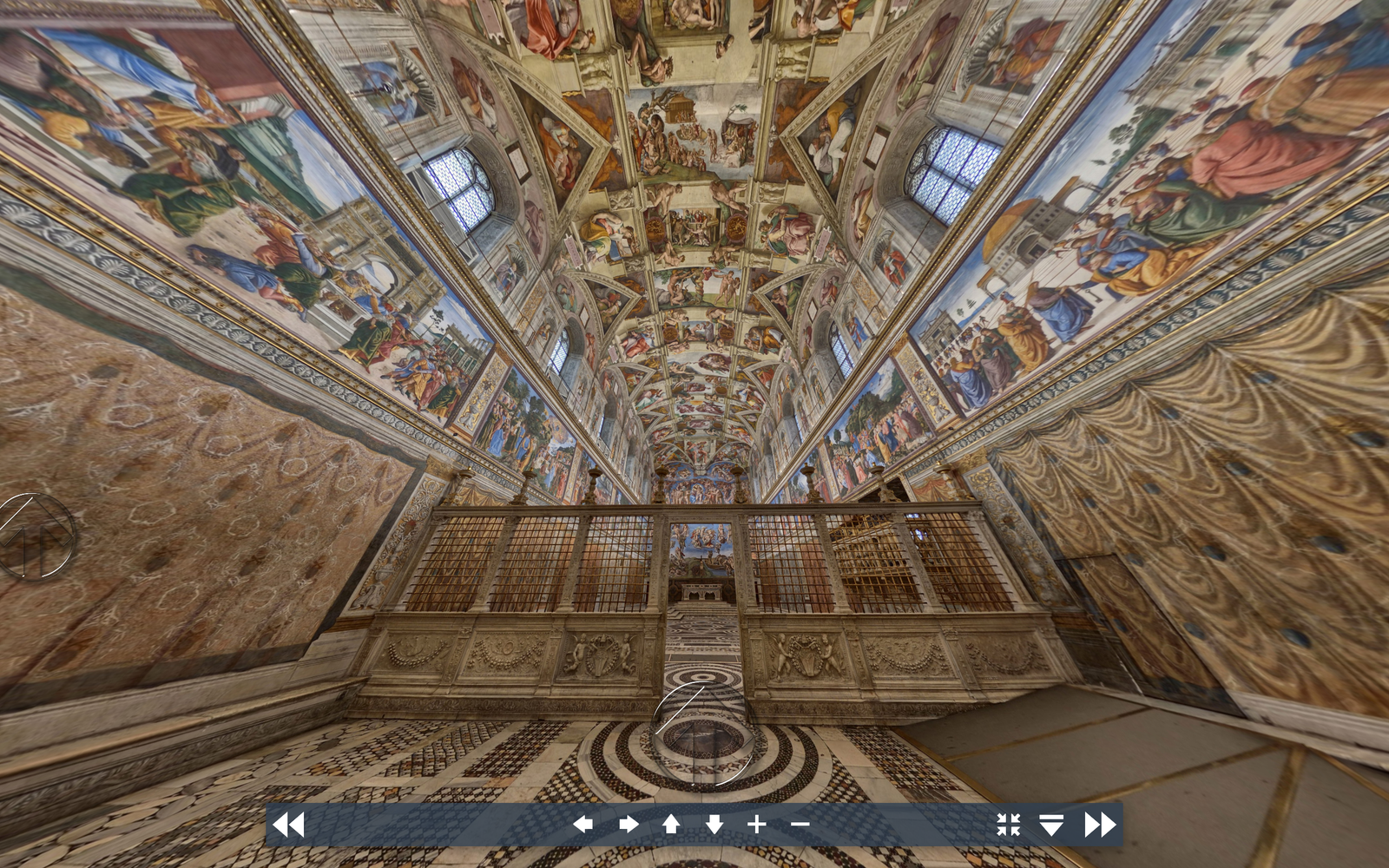
Vatican Museum Tour (http://www.museivaticani.va/content/museivaticani/en/collezioni/musei/cappella-sistina/tour-virtuale.html)

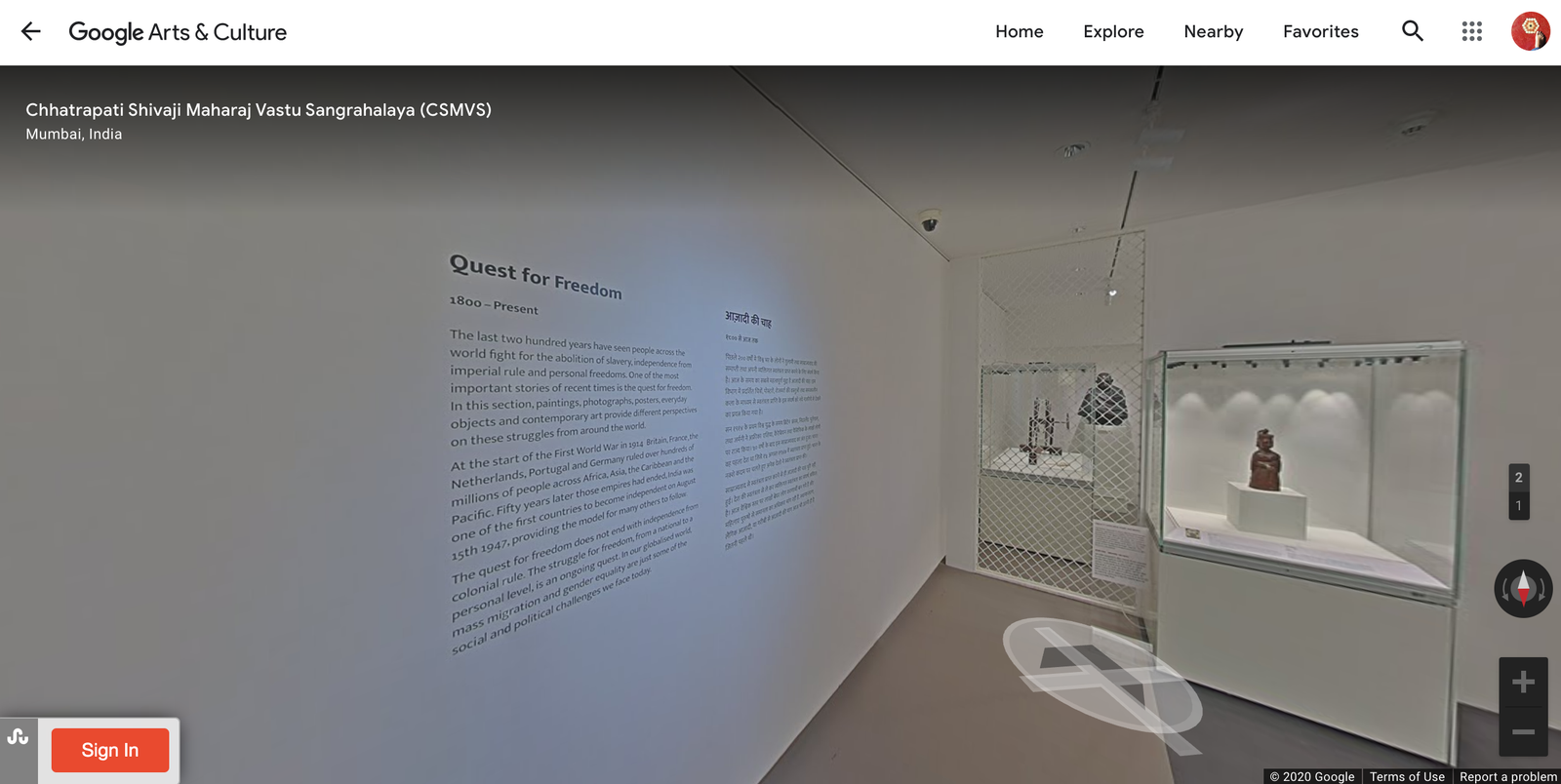
For a very long time, Museums were seen as spaces where the visitors were needed to be physically present to understand the various artifacts present. The definition of a Museum itself was about being an “institution that cares for a collection of artifacts and other objects of artistic, cultural, historical, or scientific importance”. With the shift in time, a Museum space is now no longer just about being a collection of objects and artifacts but also about how a visitor interacts with the Museum space. Museums and galleries are now incorporating modern technology and creating experiences that are no longer limited to reading a placard or a panel. However, as the world gets affected by the COVID – 19 Pandemic, the accessibility of these spaces has drastically reduced or stopped as they have been shut. As visitors are forced to stay indoors in times like these, Museums have come up with virtual tours that allow them to visit these institutions virtually. Individually and/or partnered with Google Arts and Culture and Google Street Views, the visitors can now not just sit and look at a piece of work for hours but can even do it at any time of the day due to these platforms. The experience of physically being present in a museum may not seem to fit here, but the virtual engagement lets a person look more deeply into the details, without leaving any scope for interference from other (selfie-taking) visitors. Although going digital may not create the same satisfactory alternative to experiencing a Museum in the real world, Museums are undertaking various initiatives through social platforms to keep the Museum visiting crowd engaged. Livestreaming of workshops, artist talks, an opportunity for 360-degree photography, online puzzles and collaboration with other Museum platforms are just some of the various activities to grab the attention of this crowd and to encourage the most popular message of the Pandemic #stayathome.

Chhatrapati Shivaji Maharaj Vastu Sangrahalaya (CSMVS) Mumbai (https://artsandculture.google.com/streetview/india-and-the-world-level-2)


With the spread of the Pandemic, for designers, and researchers, it becomes a challenging aspect on how to ensure the continuous functioning of a space such as a Museum where not just co-learning takes place but the content within has to be maintained for the future viewers. Repetition of content can be a loophole when it comes to bringing out the Museum on a social platform. Researchers and Graphic designers can work together to create interesting and engaging data that caters to different age groups while on the other hand, even space designers can work with interaction designers along with the former two to create virtual experiences that help the viewer remember information in a better manner and to create a different experience every time. The COVID-19 Pandemic has occurred at a time when technology and accessibility of information are all over the place, yet not specifically always where it has to be. In a time when Museums are specifically looked at as places that need to be visited to be understood, the Pandemic brings an assurance towards re-looking at this aspect by providing an opportunity to make these spaces digitally accessible to a far greater audience, perhaps in a way that physical accessibility doesn’t.
(This perspective was originally written by Namita Kalve. Namita heads Content Research at Lokusdesign. She’s a pro at using Photography as a tool in Research. A movie buff, she also loves travelling and listening to the radio.)


Why lack of sacredness is at the roots of climate change?
  • November 08 2021|
  • 0 comments |
  • Category : Uncategorized

Long ago Galileo proved, we as humans are not the centre of the universe. I feel it is about time where we need to establish that we humans are not the centre of everything around us. Just think of our modern cities, which are largely conceptualised, designed, and built “against” nature. We still “primitively” think in externalities, with animism surfacing in our behaviours, rituals, and relationships with everything around us. We need to think and design with a totally new paradigm. Our future cities instead need “to be” nature, a large ecosystem, a web, a fungi network, that harmoniously integrates all the elements. 

At a macro-level, the study and application of human metabolism is a totally new paradigm for conceptualising and designing a future city. The way the human body requires energy, water and fresh air to function so does our cities. There are flows of services, goods, data and money in a city. There are also a few byproducts like the waste that needs to be efficiently disposed of or managed like in our human body. Many of our future challenges would involve understanding these flows thoroughly. The human metabolism as a system or metaphor would help us better design our future cities that are efficient, less entropic, antifragile and harmonious.

At a micro-level, immersion or exposure to nature in our daily life might open our eyes and make us aware of our (strong) sense of separation between “private”, to be nurtured and protected, and “public”, to be used and abused. The way we behave in our backyard garden in terms of waste management and care is mostly different from how we behave in a park or an open city area. Till the time my home is clean, I’m fine and then I don’t care about my precinct or the city is the prevalent attitude. The urban and unfortunately now the rural belief of responsibility implies the exclusion of the exterior and clashes with the notion of sacredness, e.g. a sense of sacred when visiting a forest or a beach. This lack of sacredness is at the roots of climate change because our modern economies, cities, and cultures have lost the notion of what is never to be broken or infringed; the sacred.

In this respect, we should totally rethink or kill the concept of parks, natural reserves, or even CSR departments in corporations, because they represent the way of thinking whereby we aim at creating and maintaining islands of intelligence in an ocean of stupidity, or islands of creativity and care in a sea of selfishness and destruction. The notion of a park is the protection of a minor part of nature, say a small portion or part of a river, versus the exploitation of the larger part that is not included in the park. This must be reverted, and whole rivers, whole forests, whole mountains, whole corporations, and whole cities should become sustainable in the way they are conceptualised, designed, and managed.

We need to think and design with a totally new paradigm!

(This Perspective was originally published on November 6, 2021 by Shekhar Badve on LinkedIn)


Why do winning brands focus on enduring constants within instead of uncontrollable variables outside?
  • October 26 2021|
  • 0 comments |
  • Category : Perspectives

“The ultimate purpose of life, mind, and human striving: to deploy energy and information to fight back the tide of entropy (disorder) and carve out refuges of beneficial order.” — Steven Pinker

Organisms most likely to survive are often those with the most clever control of entropy (disorder) generation. Well, we have finite energy and that finite energy is split into doing so many things. Things that are very important to things that could have been avoided.

The second law of thermodynamics states that the entropy of any isolated system will always increase over time. Most energy is spent battling the ever-increasing Entropy- the chaos, disturbance, noise, and uncertainty- engulfing you? If most energy is spent or wasted in battling entropy, chaos, or reducing noise where would you have the energy to create something enduring and worthwhile. So it’s worthwhile to look at reducing entropy.

This entropy drives a myopic Culture of impatience, impermanence, and instant gratification. It permeates deep within our culture and it is perpetuated by people, and practices. We succumb to the continuous barrage of competitive impulses and drain tremendous amounts of time, money, and effort by waging competitive wars. Rising entropy takes over and we eventually tap out having lost the will or the resources required to keep going.

“Illusion is inevitable without self-knowledge.” J. Krishnamurti

Another big reason for entropy is we are obsessed with (excessive)competitive benchmarks or fickle variables outside of them contrary to these, brands that are built on their Positive Valence- the authentic, inherent, and positively inspiring strengths that are fundamental to your DNA; Brands that embody what humans Value (9values) and represent a Culture that your Customers would proudly imbibe; Brands that serve a larger, impelling Purpose, have unprecedented customer loyalty and spend less on competitive frenzy. These brands are less entropic and are positive…..Over time they are far more successful and profitable….

Brands who shift their focus from frenzy or correction to creation, would enhance life, and not compete to add to the chaos that exists; saving them millions of dollars spent on arresting migration and competing. Brands that deliver a strong triple bottom line of people, planet, and subject-oriented products, are the Brands that command the deepest level of trust, and the highest order of loyalty.

Sounds exciting, doesn’t it? It all starts with pressing pause and distancing yourself from the Entropy. It requires you to shift your focus from the uncontrollable variables outside to the enduring constants within; To relook and redefine your brand thoroughly from the inside out.

(This Perspective was originally published on October 20, 2021 by Shekhar Badve on LinkedIn)


Some lessons for Transformation and Innovation Teams from Real Madrid’s Galacticos (All-star squad) who failed to deliver.
  • September 10 2021|
  • 0 comments |
  • Category : Perspectives

Former president Florentino Perez built Real Madrid’s football team based on the “Galacticos strategy” (Spanish for galactic, referring to superstars) where he focused on acquiring superstars and marketing the franchise. Despite having an alluring squad, Casillas, Roberto Carlos, David Beckham, Zinedine Zidane, Luis Figo, Raul, and Ronaldo, Real Madrid failed to deliver.

An absolutely underwhelming and quite frankly embarrassing failure that turned out to be. Sure they won some but that was the bare minimum that those players should have achieved and that’s pretty much what they achieved. How on earth did it happen? Despite all the quality and credentials they had, they could never truly deliver success. Whether this was because of club dynamics or the players couldn’t emerge out of failures, or simply the fact that the players were extremely over-rated and never had the mindset to win in a team, the question still remains to be explored.

Similarly at the heart of many organisations today there are star teams or individuals who are not able to deliver. This is a deeper problem that blocks organisations from transforming and innovating. In today’s volatile business environment and supersonic technological advancements, transformation and innovation become key to deliver shareholder value and achieve customer satisfaction. To overcome challenges posed by volatility, ambiguity, and prolonged uncertainty an organisation requires teams and processes that are formed through a continuous realignment of resources and capabilities.

Transformation and innovation-capable teams are made up of people who are not only high performers but have an inherent balance of skills, attitudes, and mindsets that allow them to sustain orientation, focus, agility, and optimism in the face of ambiguity and uncertainty for prolonged periods of time. Unfortunately, not all top-performing and academically brilliant team members are equipped.

In 1991, Danish politician and social worker Uffe Elbæk took out a $100,000 personal loan to open an unusual business school called Kaospilot. The vision of the business school was to develop a new skill set in students for navigating uncertain problems. He subsequently saw the opportunity to teach these skills to business leaders who needed to do the same. Chaos pilots are needed on a transformative and innovative team to wade through uncertain waters for prolonged periods of time.

Chaos pilots are people who can creatively lead a project through ambiguity and uncertainty. They inherently have the capability, but most importantly they also have other critical skills, such as the ability to create structure and modify processes within chaos and take action. Leaders who are chaos pilots are able to drive a team forward on a project even as the environment around them is negative and fluctuating.

How to identify a Chaos Pilot:

  • They are high performers
  • They are people who make those around them uncomfortable by challenging the status quo
  • Hold a unique balance of skill, attitude, and mindset
  • Strong problem framing skills
  • They have sustained focus, agility, and optimism even in prolonged uncertainty
  • Comfortably lead a project through uncertainty
  • They have the ability to create structure within chaos and take action
  • Drive a team forward on a project in a fluctuating environment
  • Divergent thinking, convergent action, and influential communication
  • Skilled at implementation and advanced technologies
  • Future-oriented and with real-world project experience
  • They are often seen posing “why” questions

(This Perspective was originally published on September 9, 2021 by Shekhar Badve on LinkedIn)


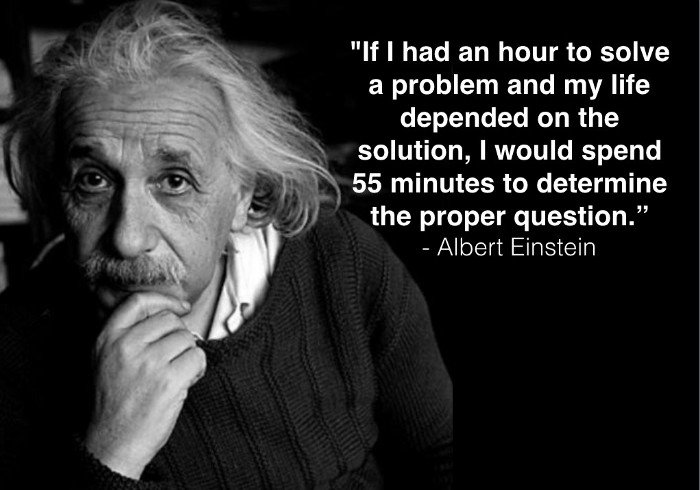
Why did Einstein say framing the right question is important?
  • July 18 2021|
  • 0 comments |
  • Category : Perspectives

Consider, for example, ceiling fans — most often, surface level or incorrect questions will lead to an object-oriented design of it and will end up in aesthetic modification or some bit of functional correction. One would never work upon its subject — to reduce the body core temperature (and not to reduce the temperature of the room or to throw air around). Some AC manufacturers are working on improving buildings rather than improving their AC’s, Chinese Taipei Government and Indore Municipal Corporation dramatically reduced their waste and waste management problem, Dyson changed the way fans and vacuum cleaners could be, reverse time counters on traffic signals reduced our anxiety and many accidents. These are a few examples of how the right questions could lead to simple and effective innovations.

In a rapidly changing world, with dynamic requirements, assumptions will change, including potentially the assumptions that made a particular approach the best one, or made a performance objective the most relevant. Asking the right question is a uniquely powerful tool for unlocking value in an organisation or an individual: It spurs learning and the exchange of ideas, it fuels innovation and performance improvement, and it can mitigate business risk by uncovering unforeseen pitfalls and hazards. The right question takes you close to the root or the core or the subject of the challenge or problem. If you ask fundamental subject-oriented questions numerous possibilities and opportunities will open up for breakthrough innovation.

The right question helps you break out of incremental tendencies. Incrementalism makes us believe we are doing OK, but it can obscure the real danger of falling ever further behind more rapidly advancing alternatives and expectations. But it’s one thing to understand that incremental efforts are not enough and another to let go of running a little harder on the business-as-usual treadmill and to really look for what might make the treadmill obsolete. Framing the right question can break the barrier, pop the bubble of complacency, push you to reconsider the rules of the game. A right question has the power to make you step back and ask: Why is this product or service needed? Why does our organisation exist? Is this what we should be doing? What else is possible? Are the organisations shared outcomes still the most relevant and important thing you should be focused on?

The right question is:

  • Deep and authentic: Powerful questions should expose what you don’t yet know
  • Compelling: A powerful question should pull people out of an incremental mindset, refocusing how to achieve an entirely new level of impact
  • Wide and open-ended: Instead of inspiring a single, definitive answer, the right question should open things up
  • Purposeful and focused: A right question should start with a WHY and then lead to What and How question/s
  • Verb-based and actionable. The right question should be based on deep insight and should push you to take action

Examples of right questions:

  • Why do we need a particular appliance or what purpose does it really serve? (see the ceiling fan example above)
  • Why do we want to make our trains even faster? (is reaching early psychological or notional. Can we deal with this question differently)
  • How do we grow higher-quality food in a future with half the water supply?
  • Why do people jump traffic signals which lead to chaos and accidents?
  • Why do people waste and litter and how do solve waste management problems?
  • How can we use technology to see the impact of our decisions and make better ones?

The right question would get you closer to the root of the problem, reduce entropy, and shed light on new approaches to consider that weren’t necessarily the original, “assumed” problem. Right questions have the power to transport us to unimagined scenarios and transform the way we see reality. When people see things from a new perspective, innovation happens.

So the next time you are designing a pen, ask yourself the right question, if you are designing merely an object (pen), or you’re designing for its subject (communication). What sort of a pen would make you more romantic or what sort of pen makes you write more or communicate better.

(This Perspective was originally published on July 17, 2021 by Shekhar Badve on LinkedIn)


What do fractals teach us about patterns that occur again and again at different scales and sizes?
  • June 14 2021|
  • 0 comments |
  • Category : Perspectives

Patterns like weather, diseases, stock-markets, migration, technological development, traffic flow, and many others follow the self-similarity of fractals at different scales.

“Miracles happen, not in opposition to Nature, but in opposition to what we know of Nature”. — St. Augustine

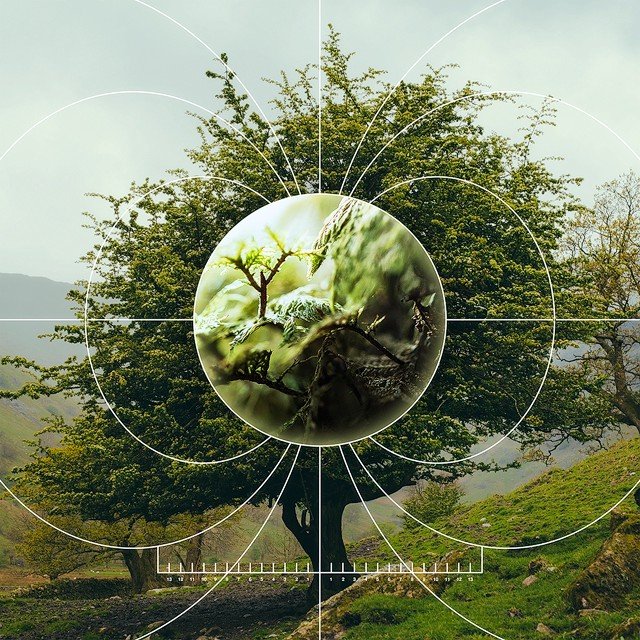
Chaos (entropy) describes a system that has apparent randomness but, when more closely observed, the order is seen. Fractals are objects in which the same patterns occur again and again at different scales and sizes. In a perfect mathematical fractal — such as the famous Mandelbrot set, this “self-similarity” goes infinitely deep: each pattern is made up of smaller copies of itself, and those smaller copies are made up of smaller copies again, forever. Many natural phenomena are fractal to some degree.

The chaos and irregularity of the world — Mandelbrot referred to it as “roughness” — is something to be celebrated. It would be a shame if clouds really were spheres and mountain cones. Look closely at a fractal, and you will find that the complexity is still present at a smaller scale. A small cloud is strikingly similar to the whole thing. A pine tree is composed of branches that are composed of branches — which in turn are composed of branches.

A tiny sand dune or a puddle in a mountain track has the same shapes as a huge sand dune and a lake in a mountain gully. This “self-similarity” at different scales is a defining characteristic of fractals. Fractal geometry can also provide a way to understand complexity in “systems” as well as just in shapes. The timing and sizes of earthquakes and the variation in a person’s heartbeat and the prevalence of diseases are just three cases in which fractal geometry can describe the unpredictable.

“The ultimate purpose of life, mind, and human striving: to deploy energy and information to fight back the tide of entropy and carve out refuges of beneficial order.”— Steven Pinker

The disorder is not a mistake or a curse; it is our default. Order is always artificial and temporary. An autopoietic system is the regeneration of components within a boundary of its own making. We have to expend a lot of energy to keep things in an ordered state. What if the disordered state is by design or the desired goal or part of the plan. The energy needed to remain in a disordered state will be very less. Low entropy or complexity brings boredom and complacency and high entropy brings confusion and despair. Optimum entropy brings pleasantness, positivity, and surprise.

Higher degree of predictability leads to rigid, inflexible thinking associated with repetitive and ruminative disorders such as depression, addictions, and OCD. And while at the other end of the spectrum, too much entropy is associated with a psychotic detachment from reality. We recognise life as that is made by certain chemicals, which have come together. May it is plants, animals, humans, or bacteria they are the same basic chemicals. The question then is, are there any other chemical combinations that we don’t recognise as life…(and maybe they don’t recognise us as life)

The equilibrium in nature is dynamic. “What else, when chaos draws all forces inward to shape a single leaf” Conrad Aiken

Instead of seeing entropy as a form of destruction (things falling apart) it to be seen as a state of active play. Can collapse or chaos/ disturbance be used for building the future? How definitions limit us, chaos or collapse is seen as negative but can be used for building the future making it positive. What if systems expend part of themselves to sustain and rest is consumed in disorder (entropy) or the rest collapses to form a preplanned or designed disorder that is essential for the future or is future-ready.

Imagine some part of the home items or furniture collapses due to entropy to become something, which is a future need or can be usable later. Collapse due to entropy becomes something useful later. This is how the natural system is. Something dies and becomes food or ingredients, a source of energy for someone else.

By studying extremes and self-similarities we can learn which system and features are more sensitive to changes so that we can apply this knowledge to build new systems that are more resilient and symbiotic.

(This Perspective was originally published on June 12, 2021 by Shekhar Badve on LinkedIn)


Why boredom is a bigger problem than suffering?
  • June 08 2021|
  • 0 comments |
  • Category : Perspectives

Are we creating devices those trigger boredom and a society that is bored?

Boredom is such a large part of day-to-day existence the word was first seen in Charles Dickens’ Bleak House in 1852. But because of its prevalence in our day-to-day lives, thinkers and scientists had been slow to explore this. Boredom is a much bigger problem than suffering. Meta-systems and products that were designed to deal with suffering are not especially effective at dealing with boredom.

In a personal survey conducted of close family members, friends, and colleagues I found boredom appeared even more frequently in their responses than “loneliness” or “lack of fresh air,” and trailed by “lack of freedom”. Multiply that experience across billions of people, and you’ll get a sense of how much boredom the world is facing right now. Of all the difficulties and tragedies we faced it sounds absurd to say that we’re bored in a pandemic but the stress of this moment changes our ability to pay attention. Very few people recognise that we can’t solve boredom just by having the right podcasts, must-read books, blockbuster movies, puzzles, or baking sets to keep you busy. Boredom is a completely natural reaction to not being meaningfully engaged in the world.

Apart from the pandemic-induced boredom, there is boredom because life is easy. There is boredom because achievement is difficult without effort, and effort is too much trouble. We are now overstimulated — easy access to almost infinite entertainment options is feeding boredom rather than discouraging it. Boredom a form of entropy, it turns out, can be a dangerous and disruptive state of mind that damages your health — and even cuts years off your lifespan. As designers, are we creating devices those trigger boredom and a society that is bored? It’s a question worth pondering over and debating.

There are multiple opportunities to deal with boredom only if we start with a clean slate. But we should be cautious about looking for an immediate solution or an escape. Before we set out to eliminate boredom let’s ask what it is trying to tell us. Most objects that are designed and demanded simply offer instant gratification may it be a smartphone or tablet or an entertainment solution or service, which are counter-productive, the more entertained we are, the more entertainment we need to feel satisfied.

The more we fill our world with fast-moving, high-intensity time-filling devices, ever-changing stimulation, and synthetic second-hand excitement, the more we get used to that and the less tolerant we become of lower levels. We crave more time. However, when we have free time, we don’t know what to do with it. It’s like a hedonic treadmill nothing seems exciting enough to deserve our valuable time. We end up doing nothing and get bored.

Instead, it would be wiser for designers to question whether there are more serious, long-term issues that are causing us to feel disengaged. John Eastwood, director of the Boredom Lab at York University believes that boredom is a ‘crisis of meaning.’ It invites us to reflect on how we engage with the world. “Priming people to feel their lives have a greater purpose and meaning tends to make them less bored,” says Eastwood. As we enter the post-pandemic era, it would be worthwhile to re-evaluate the purpose and design approaches towards boredom-killing devices or services and to rethink what we actually mean when we say we are bored.

(This Perspective was originally published on June 5, 2021 by Shekhar Badve on LinkedIn)


1234Next ›Last »
© 2018 Lokus Design Pvt. Ltd. All Rights Reserved.