Havells | 3 - 8% Lower CAC
The Challenge
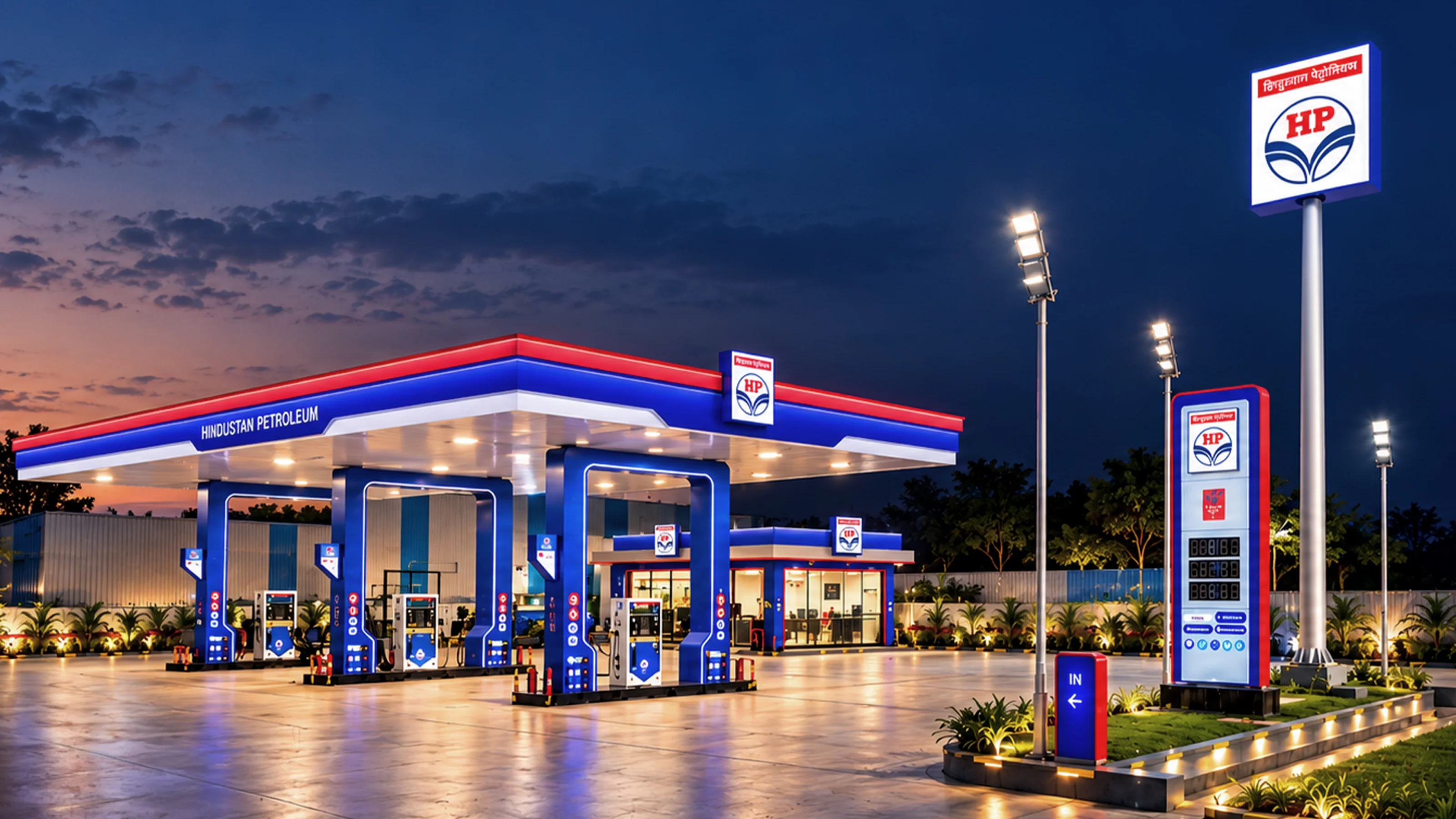
With a vast retail network serving millions of customers across diverse geographies, HPCL faced a challenge that went well beyond designing individual fuel stations.
The visible brief was to modernise the retail environment.
The hidden business brief was:
How could HPCL create a consistent, contemporary customer experience across a highly distributed network, while reducing the cost, time and operational complexity of building, maintaining and repairing that network?
The challenge intensified as competition in fuel retail grew, and customer expectations evolved. HPCL needed to strengthen brand differentiation while improving the economics of a large and geographically dispersed network. Different site conditions, infrastructure, customer flows, and levels of brand expression create inconsistency. More importantly, CapEx, OpEx and time-to-market were affected by the complexity of executing and maintaining the experience across the network.
Materials and components that worked in one location could become difficult and expensive to source, transport, replace or repair in remote parts of India.
Damage → Replacement → Procurement → Logistics → Installation → Downtime
This created recurring costs, longer repair cycles, and operational complexity.
The business therefore needed to address:
The strategic question became:
How can design turn HPCL’s network complexity into a more consistent, cost-efficient and scalable retail experience, reducing CapEx, OpEx, time-to-market and lifecycle complexity while strengthening the brand?
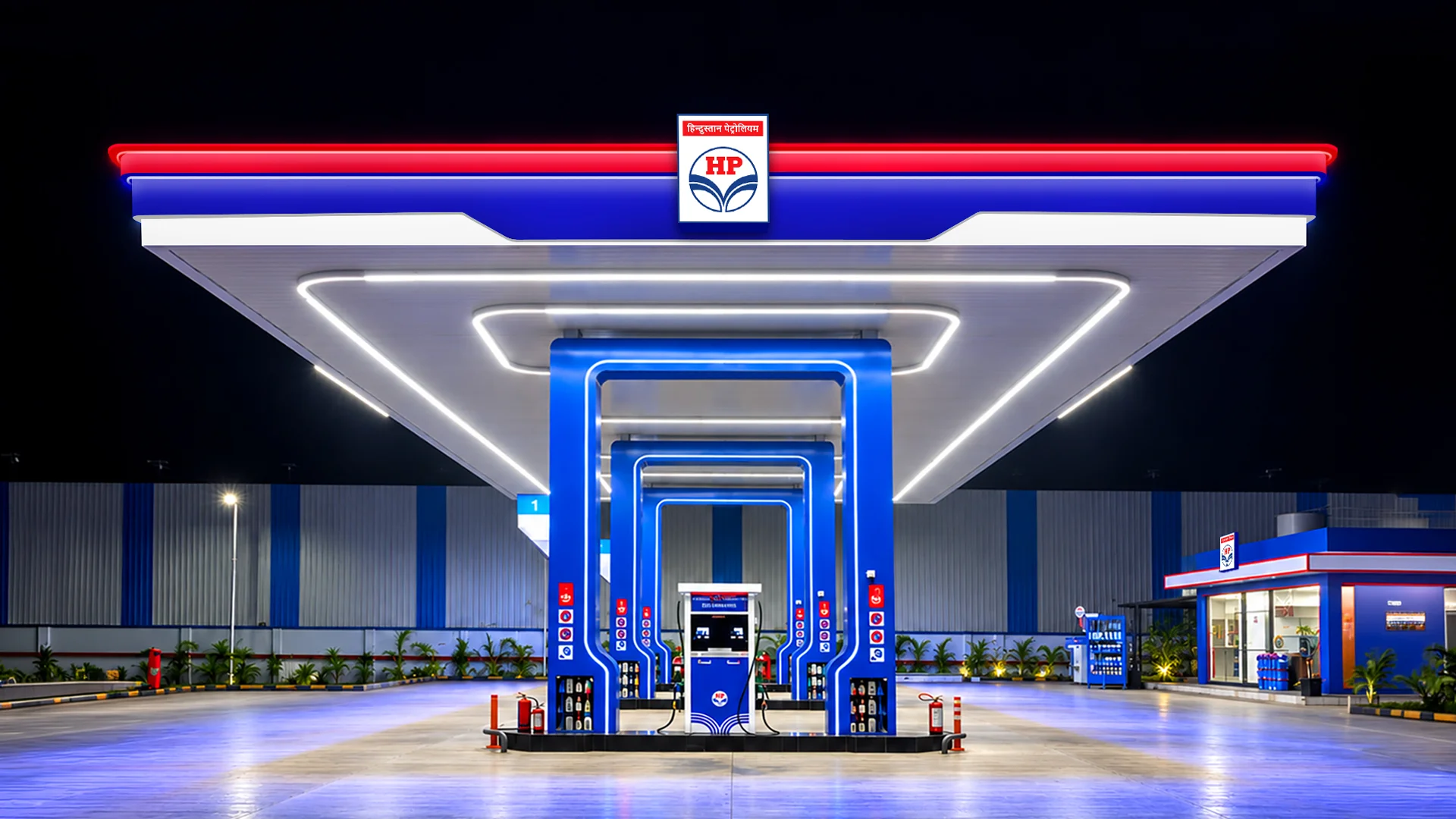
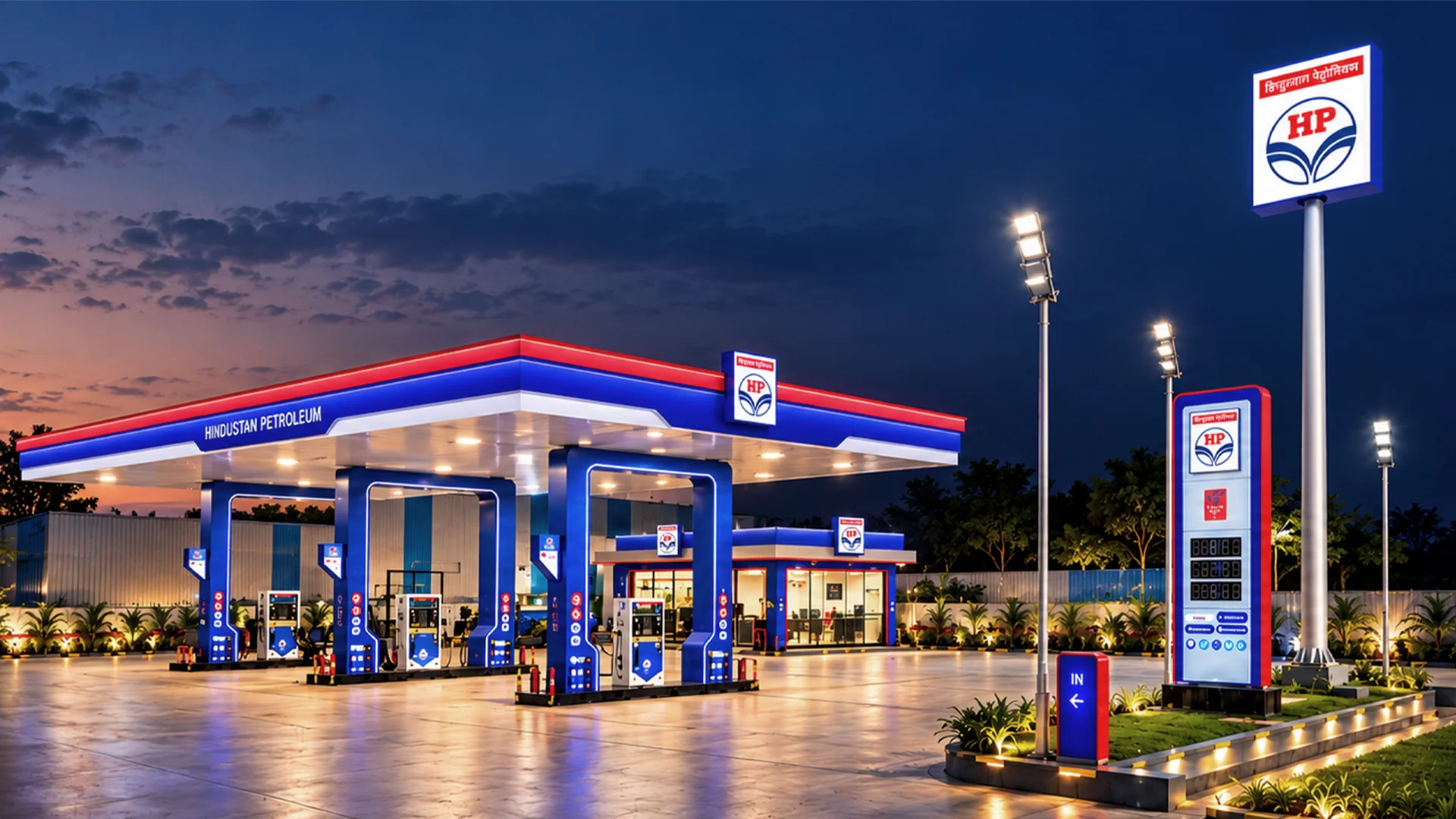
The Transformation
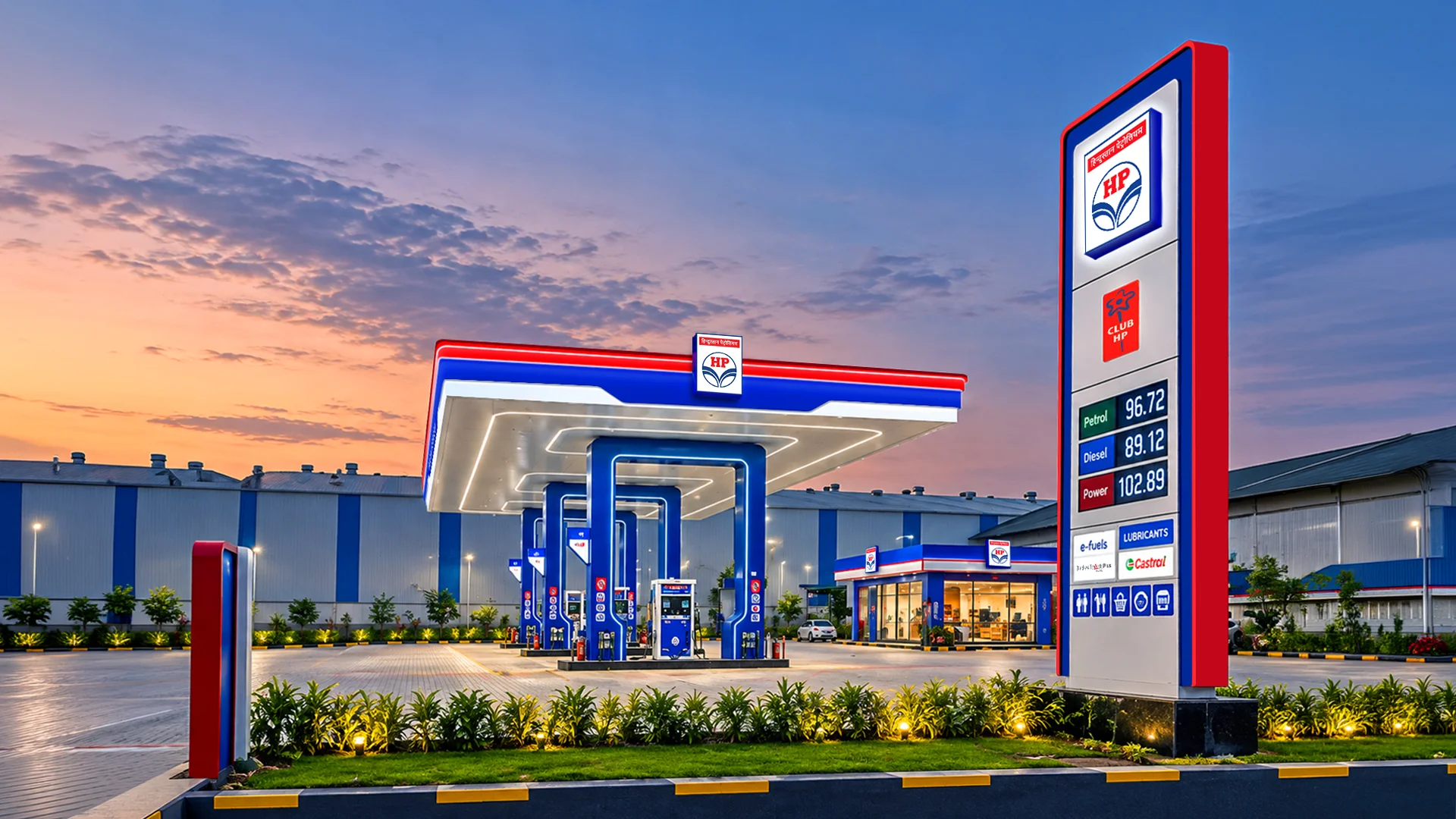
Lokusdesign reframed the assignment from outlet design to network-wide experience architecture. We mapped the customer journey, from arrival and navigation to fueling, payment, amenities and departure, alongside the operational realities of building and maintaining the network.
We identified the physical, visual, and operational touchpoints that shaped both customer experience and lifecycle cost.
We then created an integrated system connecting:
Brand Strategy → Customer Journey → Spatial Design → Signage → Communication → Materials → Operations
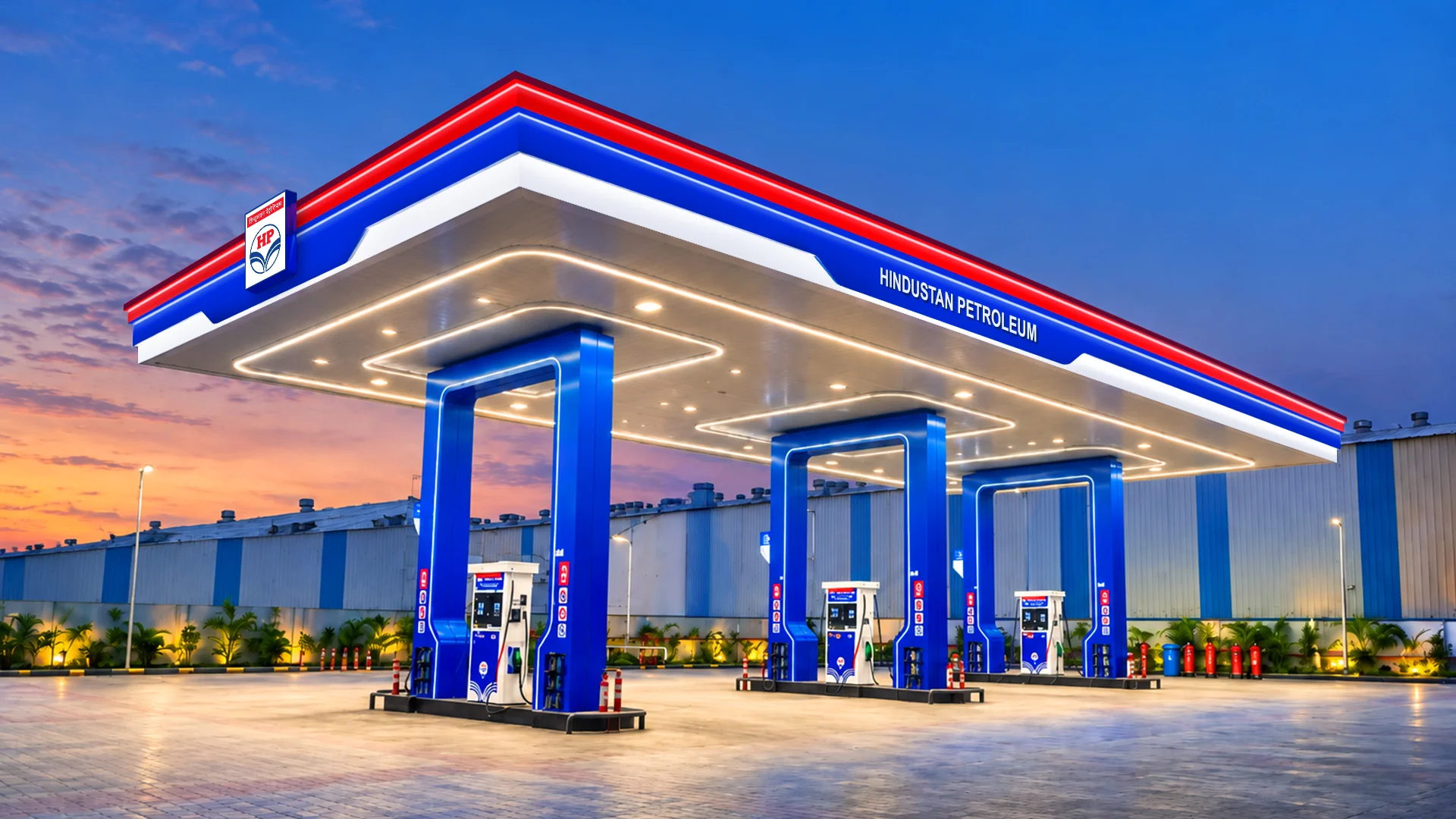
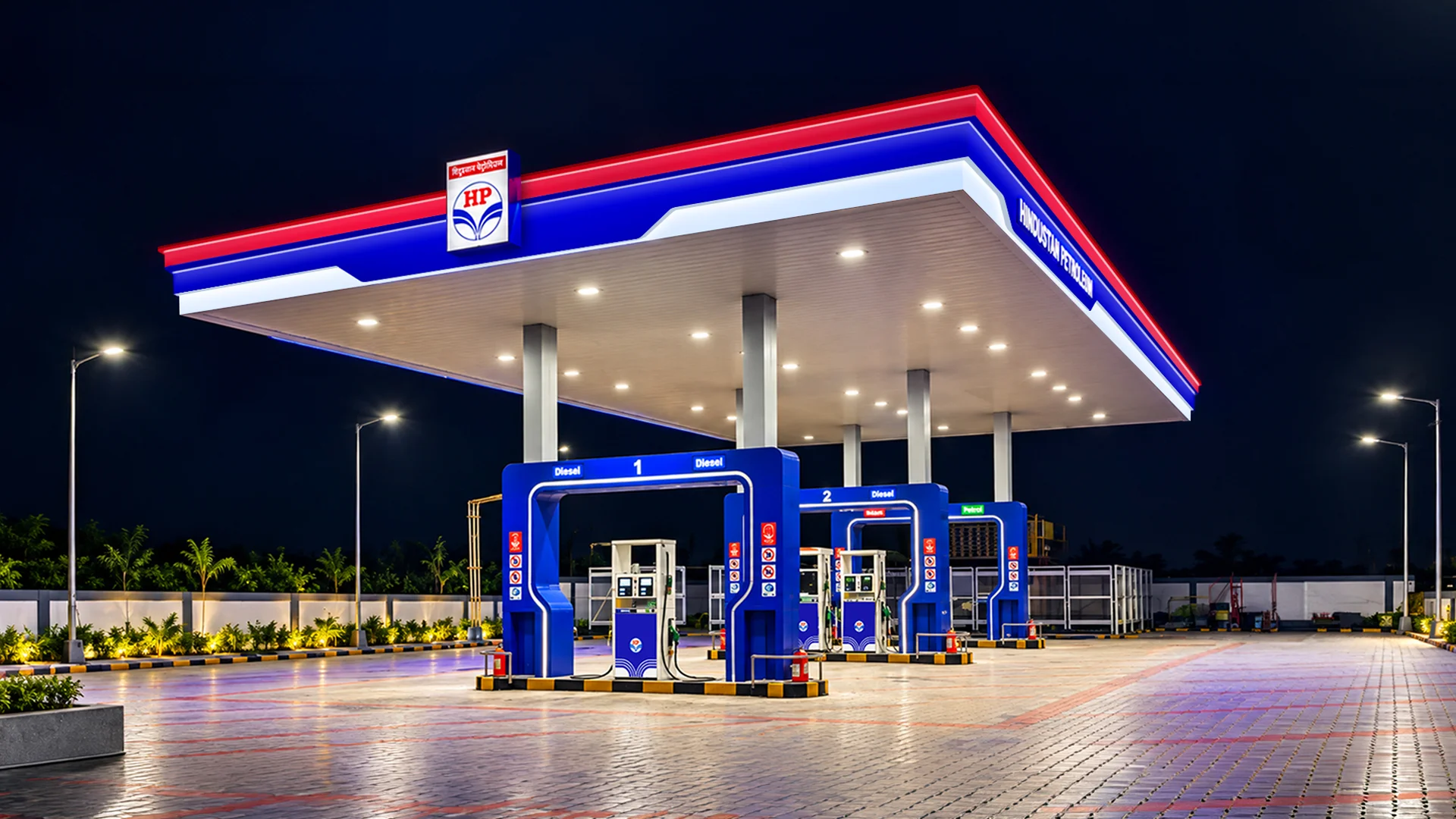
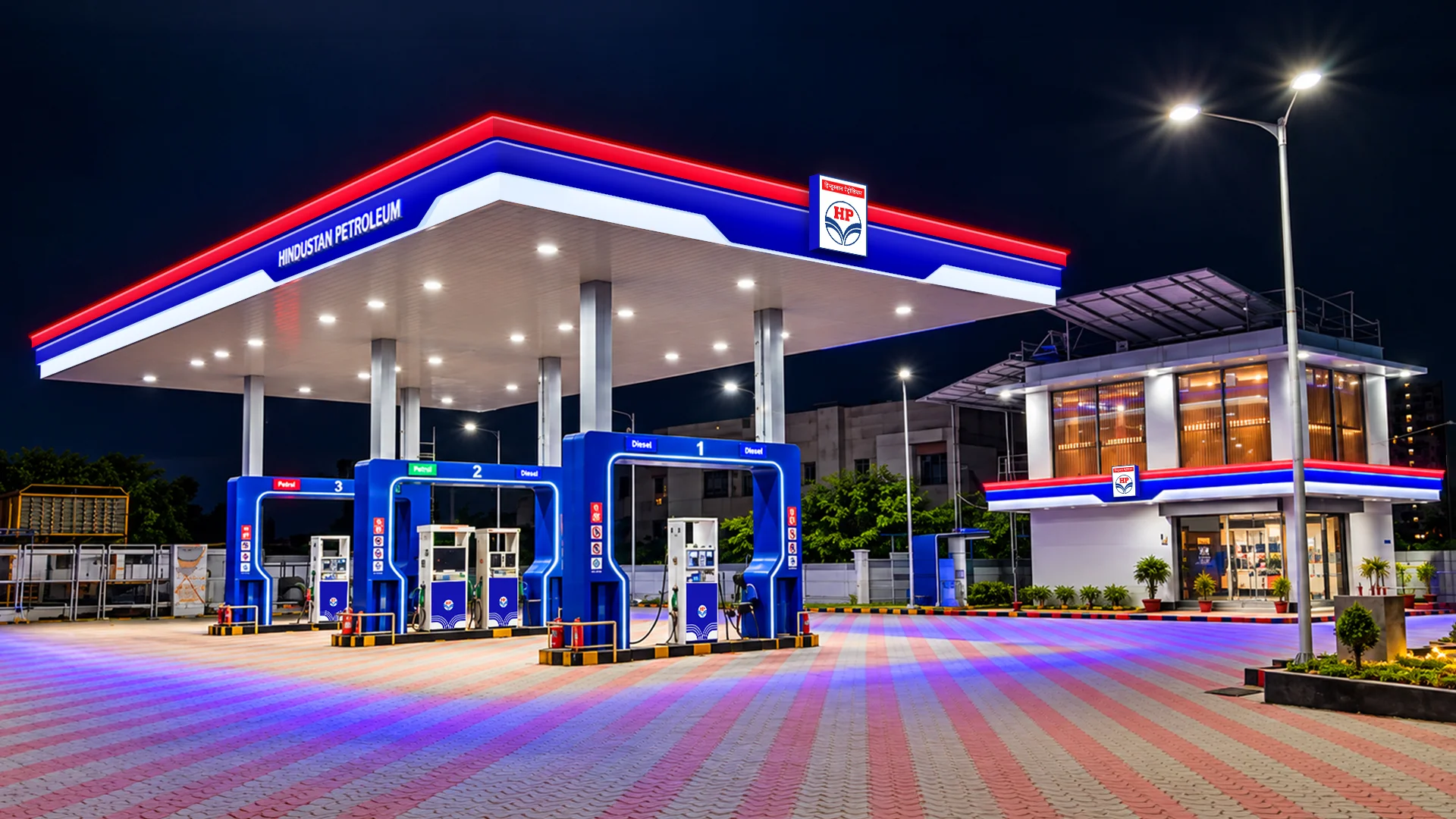
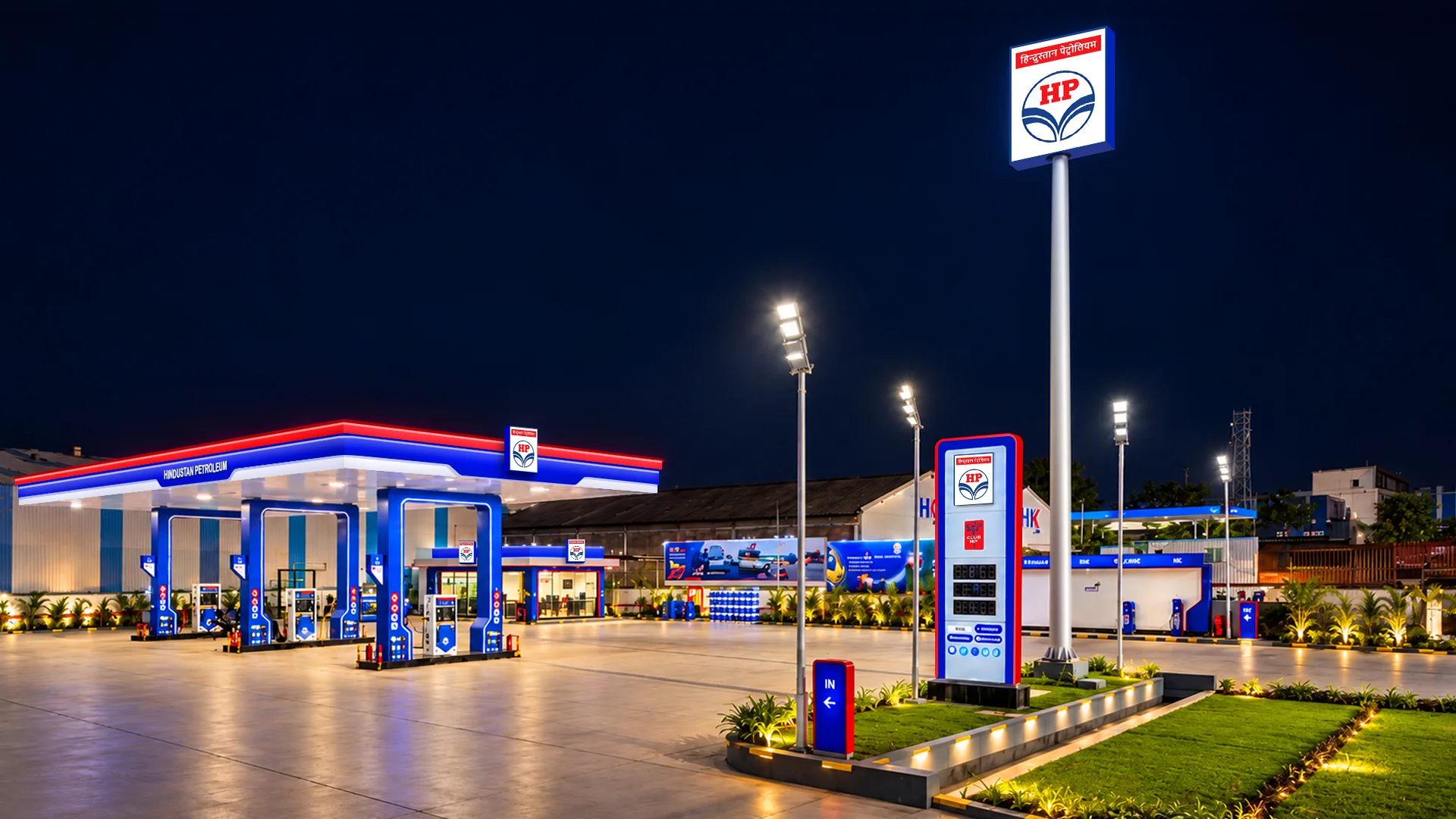
The critical intervention was a modular, standardised design system that established a consistent HPCL experience while adapting to different site conditions. Distinctive brand elements created recognition. Modular components create flexibility. Standardised specifications simplified execution. Material selection is considered not only appearance but also durability and lifecycle cost.
The Business Economics
A stronger and more recognisable brand + clearer customer journey + intuitive communication
→ reduced customer friction
→ stronger brand engagement and more efficient customer acquisition.
Modular design + standardised specifications + material optimisation + reduced bespoke fabrication
→ lower design and implementation complexity
→ more predictable investment across sites.
Durable materials + simplified components + easier maintenance
→ reduced lifecycle effort
→ lower repair and maintenance dependency.
Standardised design components + repeatable specifications + simplified implementation
→ faster deployment across new and existing locations.
One core experience system + configurable modules
→ adaptation across urban, highway and smaller-format sites
→ future integration of EV and smart services
→ consistent brand experience without treating every location as a new design problem.
Business result
Lokusdesign transformed HPCL’s retail environment from a collection of individual outlets into a coherent, scalable customer experience platform.
Network Complexity → Experience Architecture → Standardisation → Faster Deployment → Lower Lifecycle Complexity → Scalable Growth
The result was not simply a more contemporary fuel station.
It was a business system designed to make the HPCL brand more consistent, customer interactions easier, investment more productive, and the network more economical to build, maintain, and scale.
Lokusdesign reimagined and modernised one of India’s largest fuel retail networks, transforming 20,000+ outlets with a unified, scalable design language across 29 states and 7 Union Territories. Delivered a standardised retail ecosystem that reduced project costs by 15% and sped up deployment by 20%.
It also enhanced brand recognition, increased customer satisfaction, and positioned HPCL as a future-ready mobility brand.
Havells | 3 - 8% Lower CAC
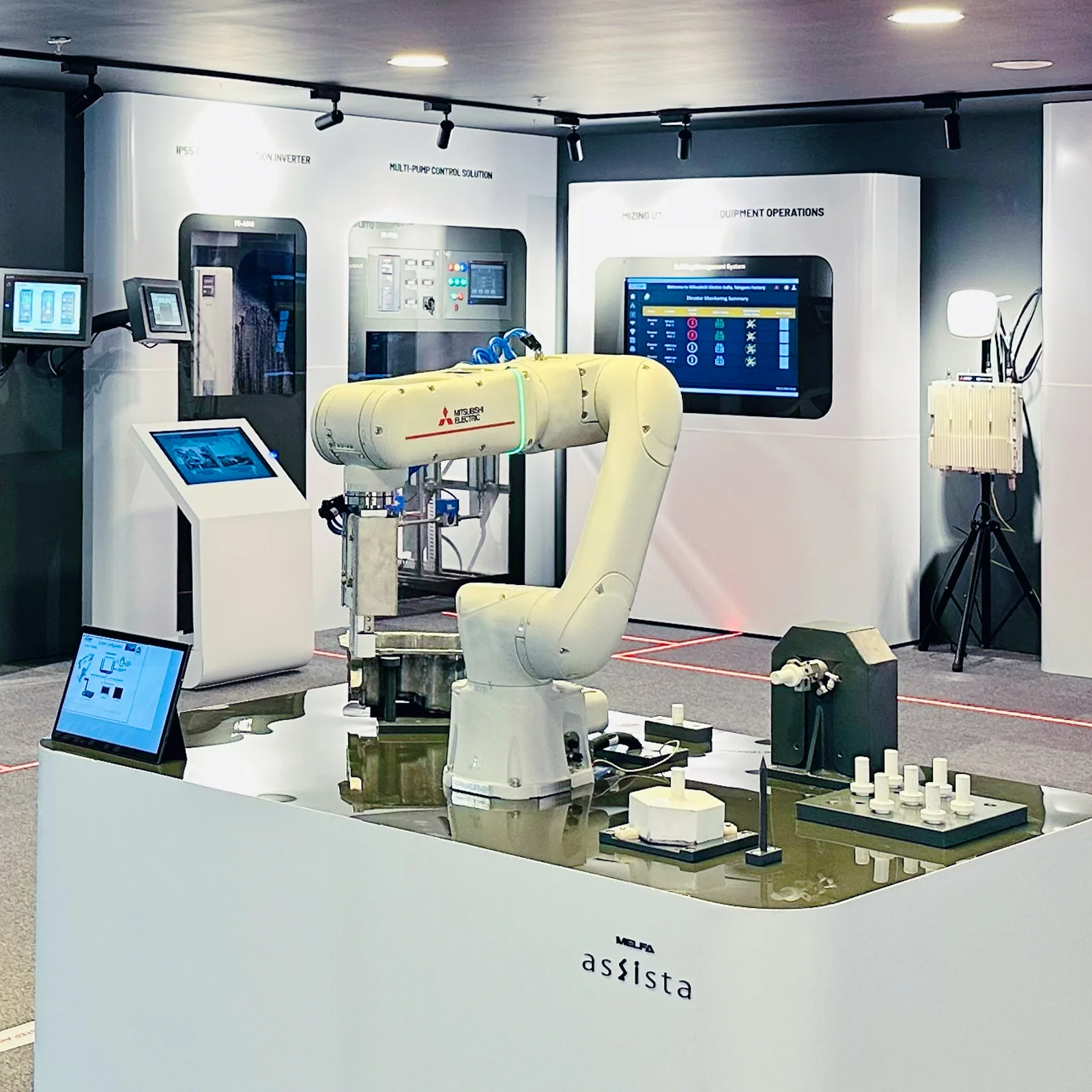
Mitsubishi Electric | 15 - 20% Solution-led sales conversion accelerated
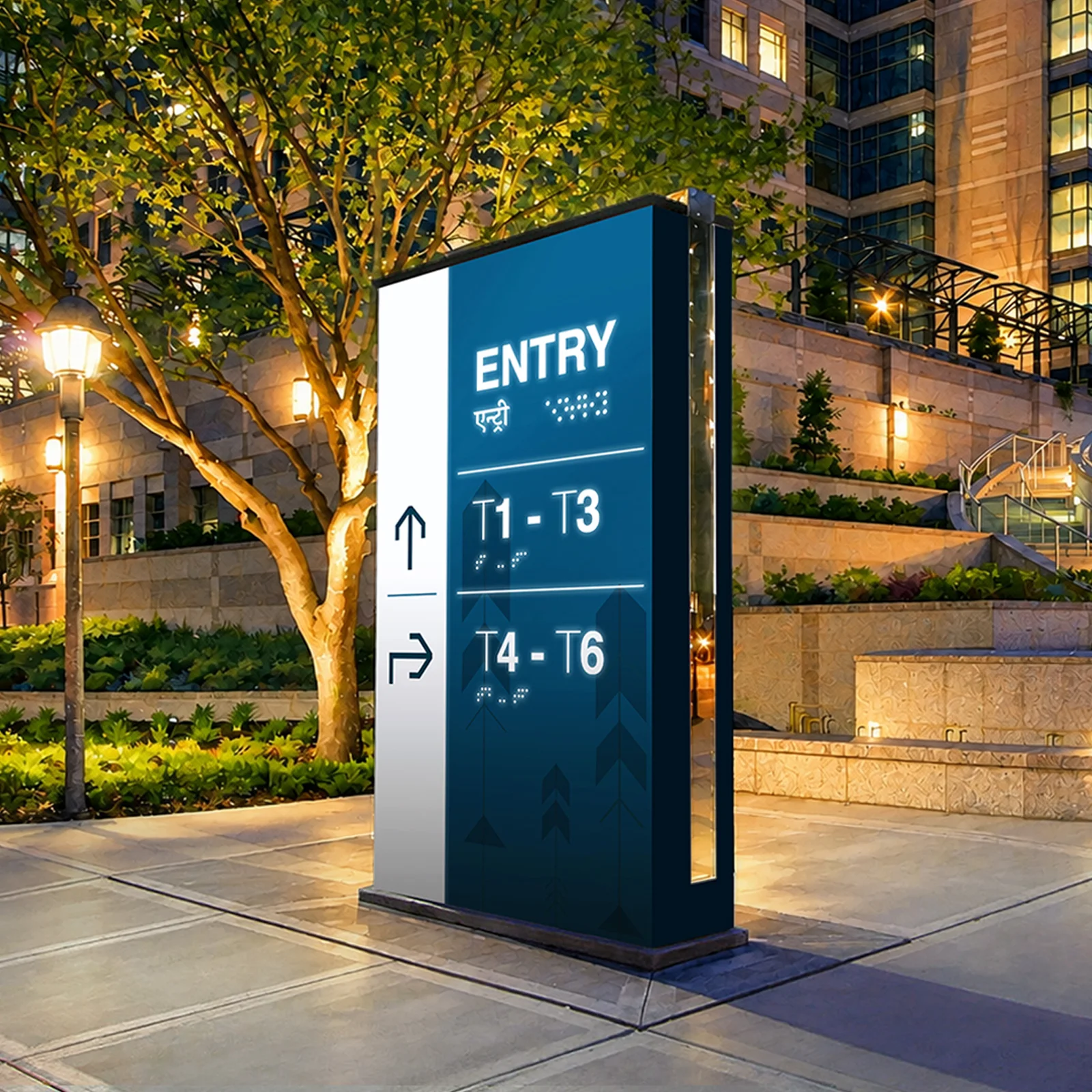
Godrej Infinity | 35% Improved wayfinding efficiency by an estimate