HPCL | 15% lower project costs, 20% faster deployment

Introduction
Godrej Infinity is a large mixed-use development bringing together residential towers, amenities, landscaped spaces, parking, commercial areas and community facilities. With multiple destinations and movement patterns across the development, the challenge was not simply to place signs—it was to create a wayfinding system that could make a complex environment feel intuitive, connected and easy to navigate.
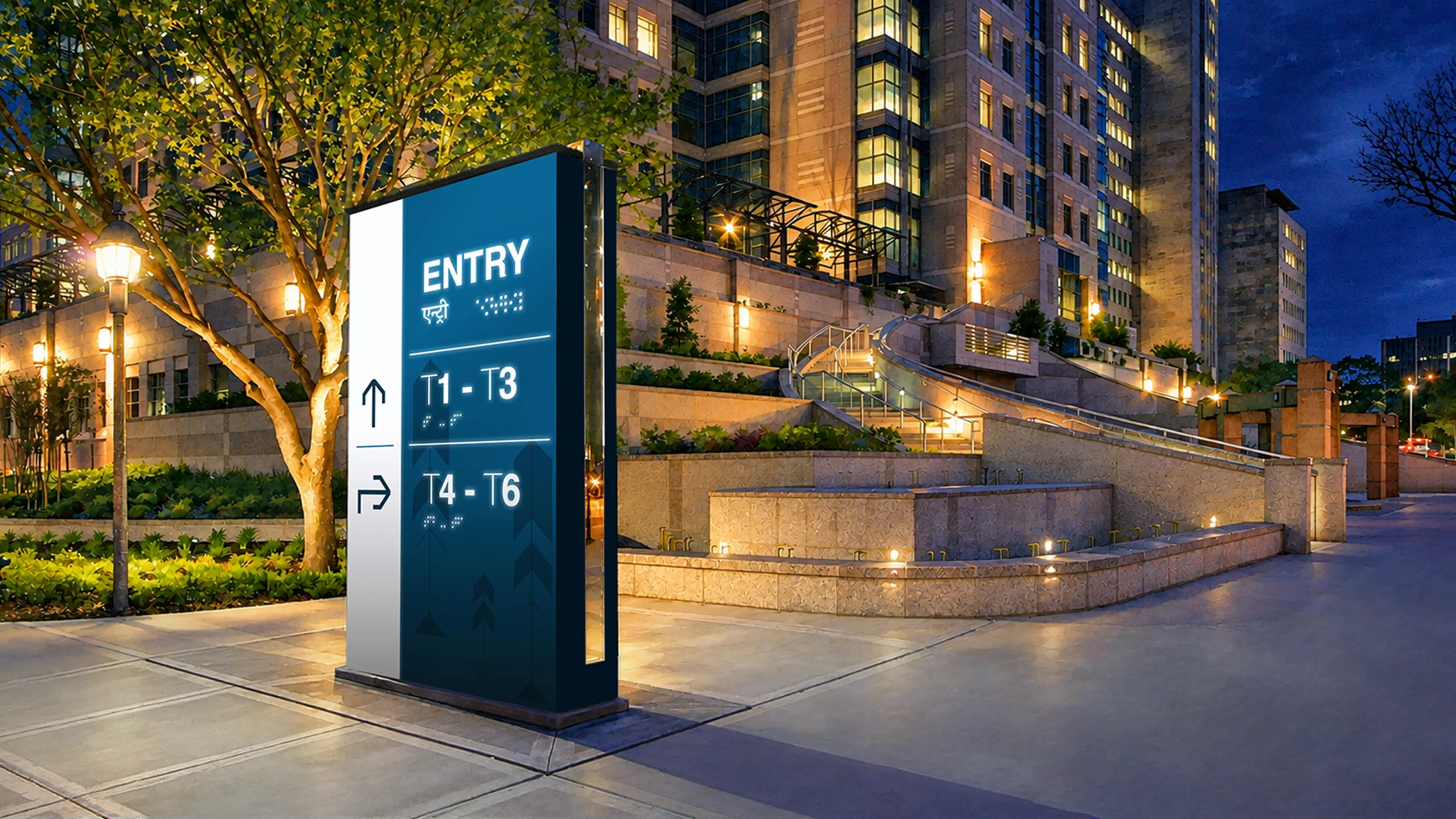
Lokusdesign approached signage as an integral part of the overall experience and identity of the development. The aim was to create a system where information, orientation and visual character worked together, helping users confidently move from arrival and parking to amenities, residential zones, and building interiors.
The Business Challenge
The complexity of the site meant that users encountered multiple decision points across very different environments. The wayfinding system needed to work equally well for vehicular and pedestrian movement, while remaining consistent across outdoor landscapes, parking areas, amenities and interiors.
The larger challenge was to establish one recognisable visual language across a diverse family of sign types, while ensuring that information could be understood quickly at the moment a decision needed to be made. At the same time, signage had to contribute to the character of Godrej Infinity rather than read as generic infrastructure.
Our Approach & Overall Impact
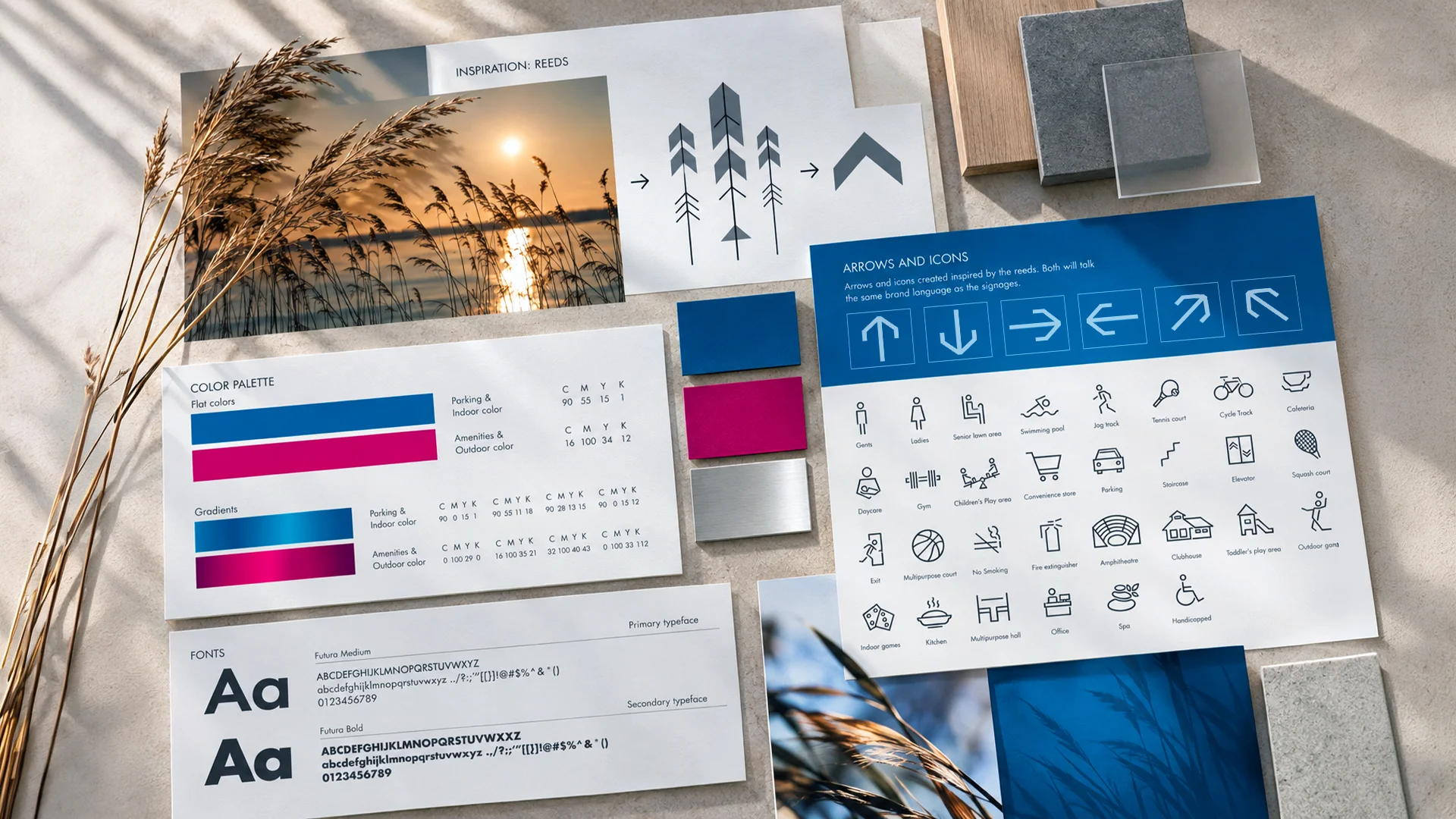
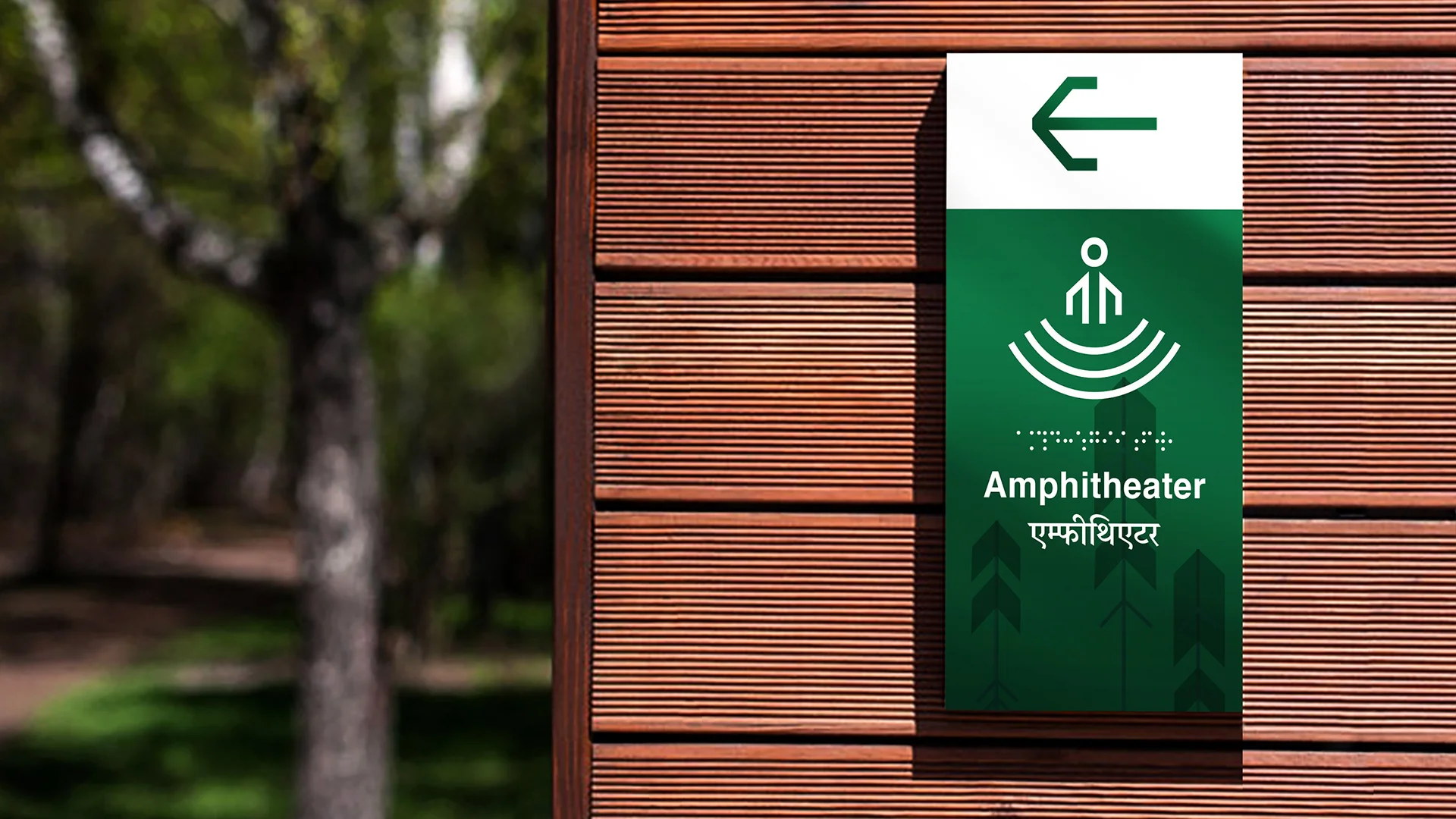
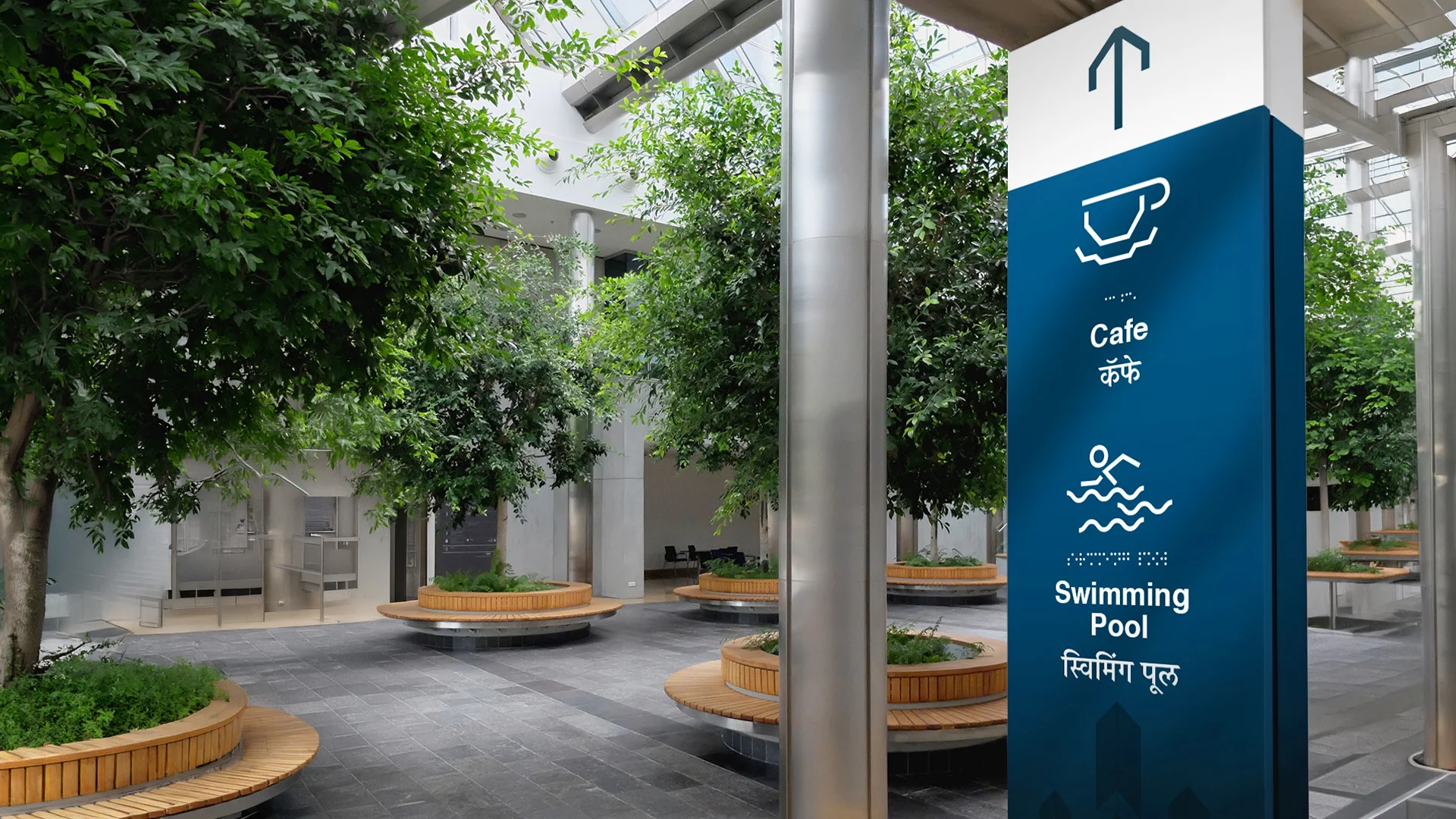
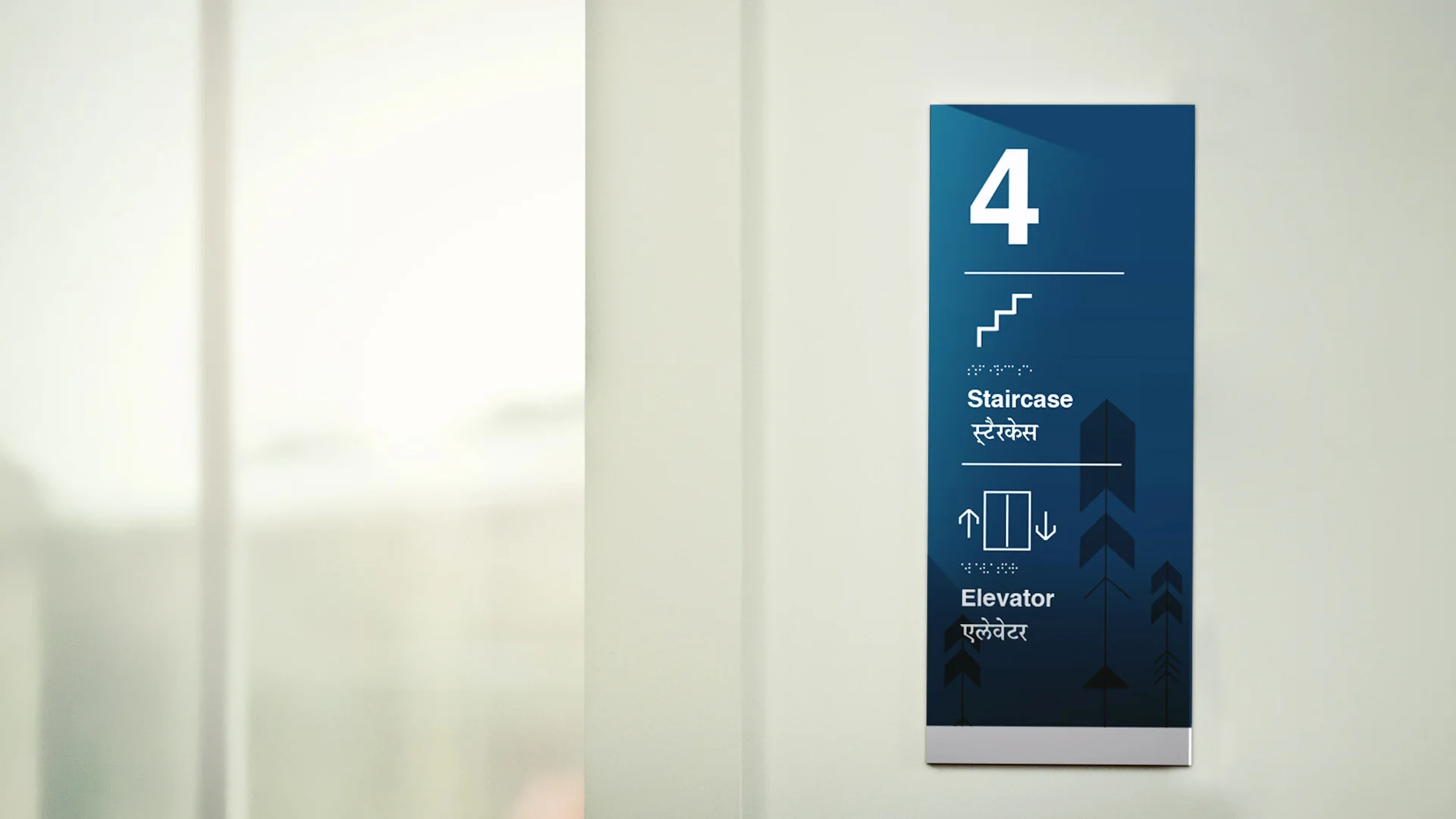
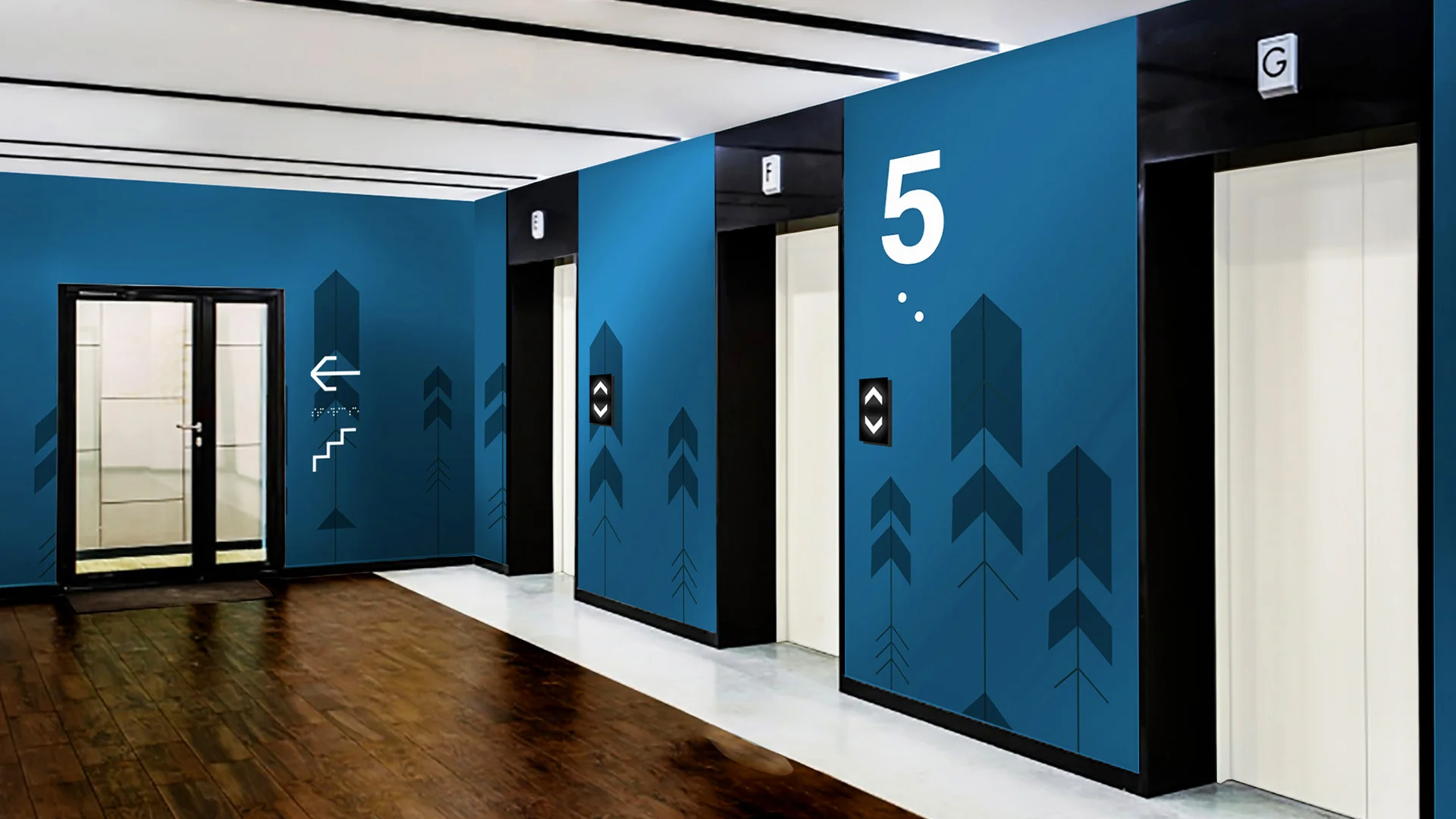
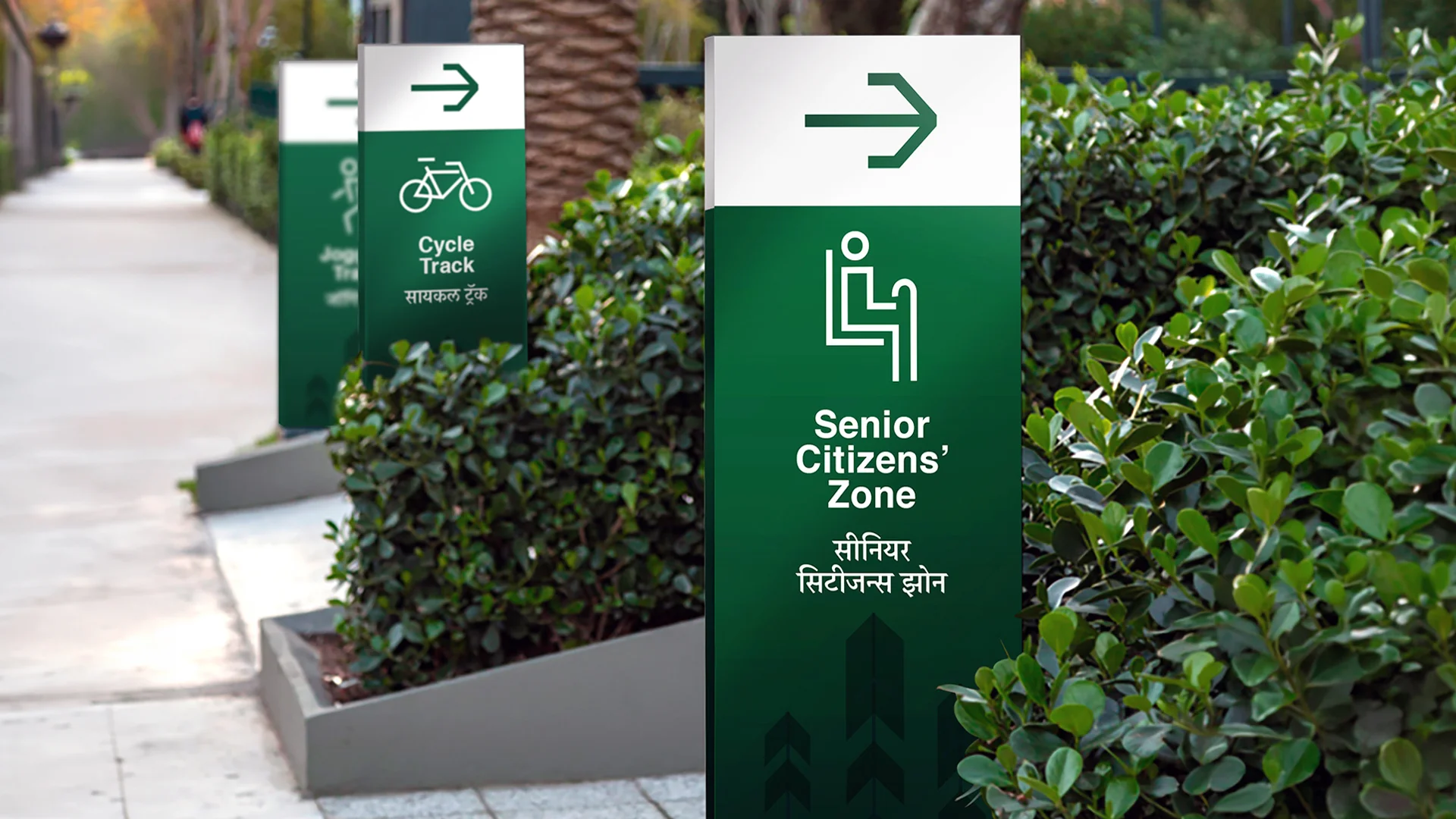
Lokusdesign built the project as a complete information and wayfinding system, rather than designing individual signs in isolation. A graphic language derived from the organic form of reeds was translated into a geometric visual grammar, with the resulting arrow motif becoming a defining element across directional signage, location markers, environmental graphics, icons and graphic accents.
The system was structured around the user’s decision-making journey. Information hierarchy ensured that destinations, directions and identification were immediately legible, while typography, viewing distances, sign proportions and information density were systematically defined across sign types. A dedicated icon family extended the same geometric language to amenities, creating consistency between symbols, typography and graphics.
Lokusdesign also integrated accessibility, structural performance and environmental conditions into the design, including Braille, viewing angles, placement, scale, materiality, stability, indoor/outdoor application and fabrication. The strategy was carried through technical detailing, BOQ development, prototyping and execution supervision, ensuring continuity from concept to implementation.
The result was a scalable wayfinding system that connects the entire development through one visual thread—from entry markers and parking directionals to pedestrian routes, amenities and residential interiors. Signage became more than functional infrastructure; it became an integrated part of the identity and experience of Godrej Infinity.
HPCL | 15% lower project costs, 20% faster deployment
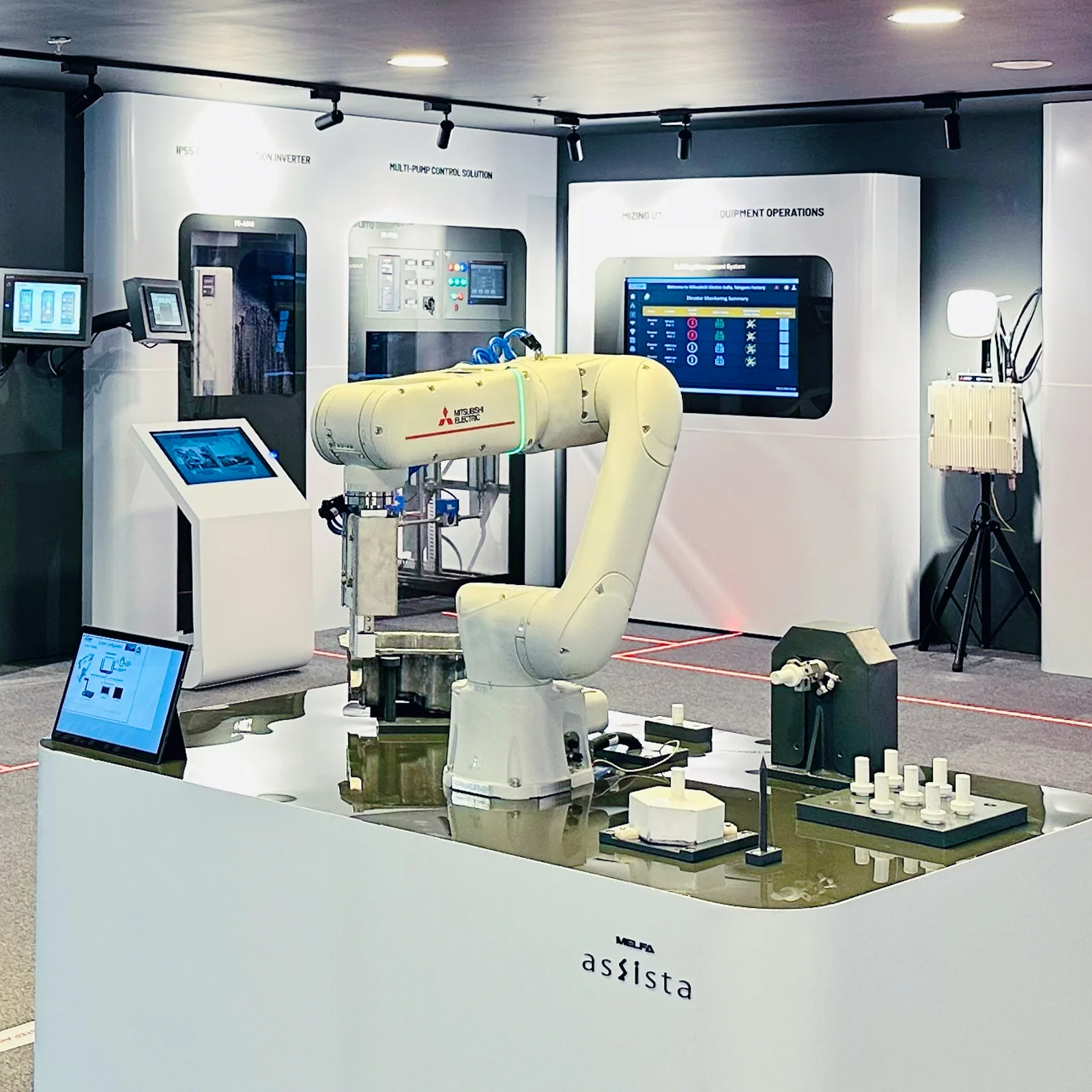
Mitsubishi Electric | 15 - 20% Solution-led sales conversion accelerated
Jaquar Product Experience Centre | 3× higher conversion rates and up to 40% shorter sales cycles